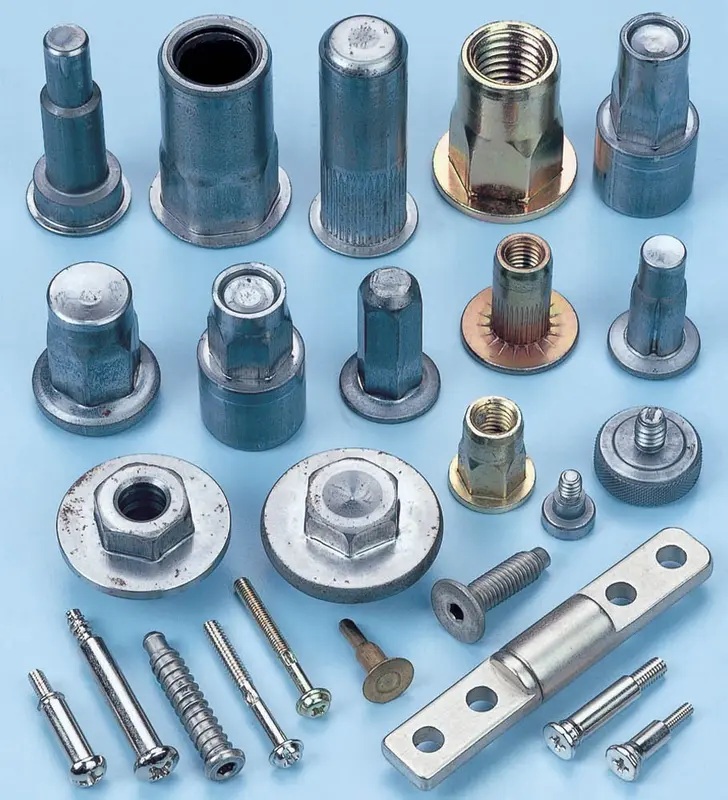
Forging vs. Casting: What Is the Difference and Which Process Should You Choose?
Forging and casting are two widely used manufacturing methods for producing metal components. Both processes can transform metal into functional parts, but they use fundamentally different manufacturing principles.
In forging, metal is shaped through controlled compressive force. Depending on the process, the material may be worked at elevated temperatures or under other controlled forming conditions.
In casting, metal is melted and introduced into a mold cavity, where it solidifies into the required shape.
This fundamental difference affects many aspects of a component, including its geometry, material behavior, tooling requirements, secondary machining needs, production planning, and overall manufacturing cost.
For engineers and purchasing professionals, the question should therefore not simply be:
Is forging better than casting?
A more useful question is:
Which manufacturing process is more suitable for the design, material, quantity, performance requirements, and application of this particular component?”
A-Corn Enterprises Co., Ltd. supports international OEM/ODM customers by reviewing drawings and manufacturing requirements and coordinating suitable manufacturing resources through its Taiwan supply network.


What Is Forging?
Forging is a metal-forming process in which compressive force is applied to shape a workpiece into the required form.
Depending on the material, component geometry, production quantity, and manufacturing requirements, different forging methods may be considered.
Common categories include:
The selection of the forging method depends on the individual project.
A typical forging production sequence may include:
Raw Material → Cutting / Preparation → Heating if Required → Forging → Trimming → Heat Treatment → Machining → Surface Treatment → Inspection
Forging is often considered when a component requires a combination of mechanical performance, structural reliability, and repeatable production.
Typical forged components may include shafts, mechanical fittings, structural parts, transmission-related components, industrial hardware, and other load-bearing parts.
However, actual process suitability should always be evaluated according to the customer's drawing and specifications.
What Is Casting?
Casting is a manufacturing process in which metal is melted and introduced into a mold or cavity that represents the required component geometry.
After the metal cools and solidifies, the casting is removed and may undergo additional operations such as trimming, heat treatment, machining, surface finishing, and inspection.
Casting is not a single process.
Depending on the component design and production requirements, possible casting methods may include:
For A-Corn's current manufacturing solution structure, Investment Casting is particularly relevant because it can be considered for custom metal components with complex shapes and detailed features.
A general investment casting workflow may look like:
Tooling → Wax Pattern → Assembly → Ceramic Shell → Dewaxing → Metal Pouring → Solidification → Shell Removal → Finishing → Machining / Inspection
The appropriate casting method depends on geometry, material, production volume, dimensional requirements, surface requirements, and cost considerations.

Forging vs. Casting: Key Differences
| Factor | Forging | Casting |
| Basic Principle | Metal is shaped by compressive force | Molten metal solidifies inside a mold |
| Starting Material | Solid metal workpiece | Molten metal |
| Geometry | Often suitable for structurally efficient shapes | Can accommodate complex shapes |
| Internal Cavities | May require additional processing | Certain casting processes can create more complex internal/external forms |
| Mechanical Requirements | Often considered for demanding structural applications | Depends strongly on material and casting process |
| Tooling | May require forging dies | Depends on casting method and tooling |
| Secondary Machining | Often required for precision features | Often required for critical precision features |
| Production Volume | Depends on tooling and part design | Depends on casting method |
| Material Selection | Process-dependent | Process-dependent |
| Cost | Depends on geometry, tooling, quantity and machining | Depends on casting method, tooling, quantity and finishing |
There is no universal winner.
The correct manufacturing process should be selected according to the complete project requirements.
When Should You Consider Forging?
Forging may be worth evaluating when the component is intended for applications where structural performance is an important design consideration.
Typical situations may include components requiring:
1. Structural Performance
Components exposed to mechanical loads may benefit from a manufacturing process selected specifically around strength and structural requirements.
2. Repetitive Mechanical Loading
Shafts, fittings, transmission-related parts, and industrial components may experience repeated loads during operation.
The design, material, heat treatment, and manufacturing method should therefore be evaluated together.
3. Relatively Defined Component Geometry
When the component geometry is compatible with a forging process, forging can provide an effective starting form before precision machining.
4. Production Repeatability
For suitable projects, dedicated tooling can support consistent production over repeated manufacturing runs.
5. Forging Plus CNC Machining
A forged component does not necessarily leave the forging process as a finished precision part.
Critical features may subsequently require:
CNC Turning → CNC Milling → Drilling → Threading → Grinding → Surface Treatment → Inspection
For this reason, buyers should evaluate the complete manufacturing route rather than looking at forging as an isolated process.
When Should You Consider Casting?
Casting may be worth evaluating when component geometry would be difficult or inefficient to create using forging alone.
Typical considerations include:
1. Complex Component Geometry
Casting can provide design flexibility for components with contours, transitions, ribs, bosses, and other three-dimensional features.
2. Near-Net-Shape Manufacturing
Depending on the selected casting process, the initial component can be produced relatively close to its required overall geometry.
Critical dimensions may then be finished through CNC machining.
3. Complex External Features
Investment casting in particular can be considered for parts where geometric complexity is an important requirement.
4. Different Production Requirements
Casting processes vary considerably.
Investment casting, sand casting, and die casting should not be treated as interchangeable processes because their tooling, geometry, material, volume, surface, and cost characteristics differ.
5. Casting Plus Precision Machining
Like forging, casting is frequently only one stage of the complete manufacturing solution.
A custom cast component may require:
Casting → Heat Treatment → CNC Machining → Surface Finishing → Inspection → Assembly
Forged Parts vs. Cast Parts: Which Is Stronger?
This is one of the most common questions buyers ask when comparing forging and casting.
The answer should not be reduced to a simple statement that one process is always stronger than the other.
Mechanical performance depends on several variables:
Forging is frequently considered for applications where mechanical and structural performance are important, but the final component should still be evaluated against its actual engineering requirements.
Likewise, a properly designed and manufactured casting can be suitable for many demanding industrial applications.
The customer's drawing, specifications, and performance requirements should therefore determine the manufacturing decision.
Forging vs. Casting: Geometry Considerations
Geometry is often one of the first factors A-Corn considers when reviewing a new drawing.
| Component Feature | Forging | Casting |
| Shafts | Often suitable | Possible depending on design |
| Structural Components | Often suitable | Also possible |
| Complex 3D Geometry | May be more challenging | Often worth evaluating |
| Ribs / Bosses / Contours | Design-dependent | Can be advantageous |
| Internal Features | Often require machining | Process-dependent |
| Precision Holes | Usually machined | Usually machined for critical dimensions |
| Threads | Usually secondary machining | Usually secondary machining |
| Tight-Tolerance Surfaces | Secondary machining may be required | Secondary machining may be required |
The important point is that the final component does not have to be manufactured by only one process.
A successful manufacturing solution may combine forming and precision machining.
Material Selection for Forging and Casting
Material selection should take place before the manufacturing process is finalized.
Factors that may need to be evaluated include:
Mechanical Strength
Does the part carry structural loads?
Corrosion Resistance
Will it operate outdoors, around chemicals, moisture, or other challenging environments?
Wear Resistance
Will surfaces experience repeated friction or contact?
Machinability
Will the forged or cast blank require extensive secondary machining?
Heat Treatment
Does the project require specific mechanical properties after forming?
Availability
Can the requested material specification be sourced reliably?
This is particularly relevant to A-Corn's business model.
A-Corn is not limited to a fixed list of material grades. Material and supplier sourcing can be evaluated according to the customer's drawing, specifications, application, and purchasing requirements.
Forging vs. Casting: Which Is More Cost-Effective?
Neither process is automatically cheaper.
The total manufacturing cost should be evaluated as:
Material + Tooling + Forming/Casting + Secondary Machining + Heat Treatment + Surface Treatment + Inspection + Production Quantity + Logistics
For example, a process with a lower initial forming cost may require more machining.
Conversely, a process requiring tooling investment may become economically attractive when production quantities justify that investment.
Therefore, the correct question is not:
“Which process has the lowest unit price?”
It is:
“Which manufacturing route provides the appropriate balance of component requirements, repeatability, quantity, quality, and total production cost?”
Forging vs. Casting: How Does Production Volume Affect the Decision?
Production quantity is another important consideration.
Before selecting a manufacturing method, buyers should provide an estimated quantity such as:
Prototype Quantity → Trial Order → Annual Volume → Expected Mass Production
This information helps manufacturing partners evaluate whether tooling investment is appropriate and whether another process could provide a more practical route.
A process that makes sense for thousands of parts may not necessarily be the most appropriate solution for a small prototype requirement.
For this reason, A-Corn recommends including both the initial order quantity and expected annual demand when submitting an RFQ.
Secondary CNC Machining: Why It Matters
A common misunderstanding is that buyers must choose between forging, casting, or CNC machining.
In reality, these processes frequently work together.
For example:
Forged Part
Raw Material → Forging → Heat Treatment → CNC Turning → CNC Milling → Inspection
Investment Cast Part
Wax Pattern → Investment Casting → Finishing → CNC Machining → Surface Treatment → Inspection
CNC machining can be used to create or finish critical features such as:
This is why A-Corn's website architecture separates Manufacturing Processes from Products & Solutions.
The customer's final product may involve multiple manufacturing processes.
How to Choose Between Forging and Casting
When reviewing a project, consider the following questions.
What is the component geometry?
Is it primarily a shaft, fitting, structural part, housing, complex 3D component, or another geometry?
What material is required?
Is the material specification already defined on the drawing, or does it require sourcing support?
What mechanical performance is required?
Consider load, wear, impact, fatigue, temperature, and operating environment where applicable.
Which dimensions are critical?
Identify dimensions and tolerances that may require secondary precision machining.
What surface requirements apply?
Plating, coating, polishing, heat treatment, corrosion protection, or other treatments may affect the production route.
What is the production quantity?
Prototype and mass-production requirements may lead to different manufacturing strategies.
What inspection requirements apply?
Critical dimensions and quality requirements should be identified before production.
From Your Drawing to a Manufacturing Solution
A-Corn supports drawing-based custom manufacturing projects through a structured evaluation process.
Step 1 — Send Your Drawing
Provide available 2D drawings, 3D models, specifications, and application information.
Step 2 — Engineering Requirement Review
Review geometry, dimensions, tolerances, material requirements, quantity, and special requirements.
Step 3 — Process Evaluation
Evaluate whether forging, casting, CNC machining, or a combination of processes may be suitable.
Step 4 — Material & Manufacturing Sourcing
Coordinate suitable material and manufacturing resources through A-Corn's Taiwan supply network.
Step 5 — Manufacturing & Quality Coordination
Coordinate production, secondary operations, inspection, and project requirements.
Step 6 — Production & Delivery
Support production planning and international customer delivery requirements.
Why Work with A-Corn?
Choosing between forging and casting often requires more than finding a single factory.
A component may involve several processes:
Material Sourcing → Forging / Casting → CNC Machining → Heat Treatment → Surface Treatment → Inspection → Packaging → Delivery
A-Corn's role is to help international OEM/ODM customers coordinate the appropriate Taiwan manufacturing resources according to individual project requirements.
Key advantages include:
| A-Corn Support | Customer Benefit |
| Drawing-Based Evaluation | Manufacturing starts from actual part requirements |
| Flexible Material Sourcing | Not restricted to a fixed material list |
| Taiwan Manufacturing Network | Access to suitable manufacturing resources |
| Multi-Process Coordination | Forging, casting, machining and secondary processes can be coordinated |
| OEM / ODM Project Support | Suitable for custom component projects |
| Quality Coordination | Inspection requirements can be incorporated into the project |
| Global Customer Support | Communication and delivery support for overseas buyers |
FAQ — Forging vs. Casting
What is the main difference between forging and casting?
Forging shapes solid metal through compressive force, while casting generally involves pouring molten metal into a mold and allowing it to solidify.
Is forging always stronger than casting?
Not necessarily. Mechanical performance depends on material, process, heat treatment, geometry, quality control, and the component's actual operating requirements.
Which process is better for complex shapes?
Casting, particularly processes such as investment casting, may be worth considering for complex geometries. However, the final decision depends on material, dimensions, quantity, tolerances, and other requirements.
Can forged parts require CNC machining?
Yes. Precision diameters, holes, threads, grooves, mounting surfaces, and other critical features may require secondary CNC machining.
Can cast parts be CNC machined?
Yes. CNC machining is frequently used after casting to finish critical dimensions and functional surfaces.
What information is required for a forging or casting quotation?
Providing a drawing or 3D model, material requirement, quantity, tolerances, surface treatment, heat treatment, inspection requirements, and application information can help manufacturers evaluate the project.
Can A-Corn source materials according to customer specifications?
A-Corn can evaluate material sourcing according to customer drawings and specifications rather than limiting projects to a fixed list of material grades.
Does A-Corn provide both forging and casting support?
A-Corn's manufacturing solution approach is based on evaluating project requirements and coordinating suitable manufacturing resources. The appropriate process should be confirmed according to the individual drawing and specifications.
How do I know whether my part should be forged or cast?
Send the drawing, material requirement, estimated quantity, and application information for manufacturing evaluation. Geometry, performance requirements, tooling, secondary machining, and production quantity should all be considered.
Can one component use casting or forging together with other processes?
Yes. Custom components frequently combine forming or casting with CNC turning, CNC milling, heat treatment, surface finishing, and inspection.
Request a Manufacturing Evaluation
Not Sure Whether Forging or Casting Is Right for Your Part?
Choosing the appropriate manufacturing process starts with understanding the component—not simply selecting a process name.
Send A-Corn your:
2D Drawing / 3D Model
Material Requirement
Dimensions & Tolerances
Estimated Quantity
Surface Treatment
Heat Treatment Requirements
Inspection Requirements
Application Information
From Your Drawing to a Suitable Manufacturing Solution
Forging | Investment Casting | CNC Turning | CNC Milling | MIM | Precision Stamping
A-Corn Enterprises Co., Ltd.
Your Reliable Manufacturing Partner in Taiwan
CTA:SEND YOUR DRAWING / REQUEST A QUOTE


